Mon - Sat: 9:00am - 8:00pm
kalarippayattu is a culture, a tradion that enables human beings to flourish in any field through a harmonious life with mother nature. It is a way of life.A holistic system helps us to elevate ourselves in to higher levels of life.
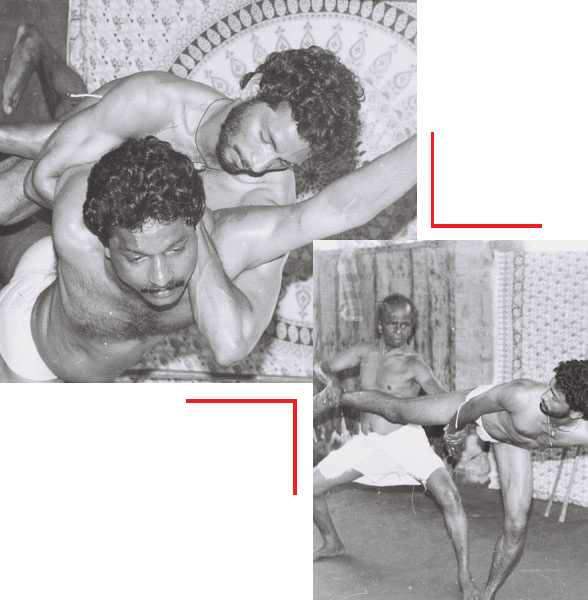
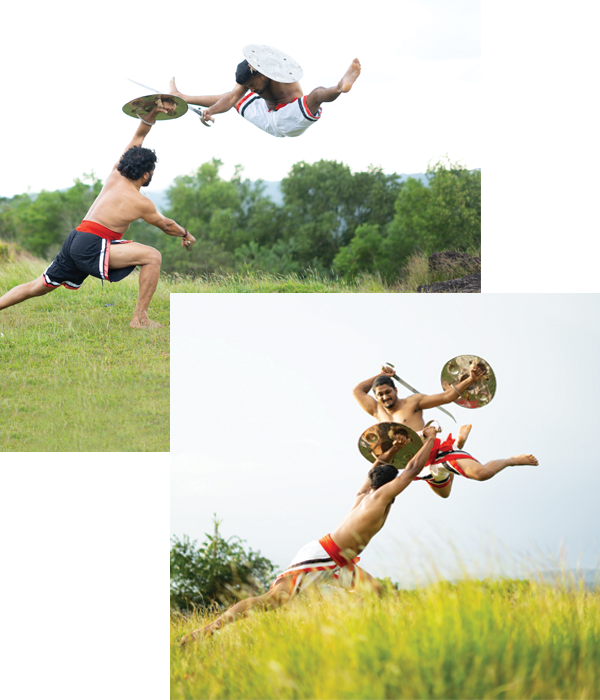
Also known as Kalari, it is an ancient martial art that originated in Kerala. Despite its Indian roots, Kalaripayattu is now practiced globally. However, the exact time of its origin remains uncertain. Some theories suggest that Kalaripayattu began as a primitive hunting technique used by Kerala’s early inhabitants to catch wild animals in the region’s wooded and mountainous terrain.
Over time, it evolved into a sophisticated combat style that enabled practitioners to overpower enemies and defend themselves.
Mythological accounts attribute the introduction of Kalaripayattu to Lord Parasurama, the sixth incarnation of Lord Vishnu, who allegedly reclaimed the land of Kerala from the Arabian Sea. Although historians dispute this claim, they are unable to pinpoint the exact time of Kalaripayattu’s origin, with estimates ranging from 200 BCE to 600 CE. The martial art gained immense popularity between the 14th and 16th centuries.
Despite the uncertainty surrounding its origins, Kalaripayattu has consistently been described in awe-inspiring terms by chroniclers and poets across various periods. They have marvelled at the complexity of its techniques, the fluid beauty of its movements, and the impressive flexibility of its practitioners.
The absence of concrete physical evidence regarding its origin has led researchers to explore alternative sources, including ancient folklores and songs. These songs contain specific references to Kalaripayattu, indicating that it was an integral part of Kerala’s cultural heritage. Furthermore, the widespread presence of kalaris (training centers) and great masters who supervised their activities suggests that Kalaripayattu was taught in virtually every village in Kerala.
Kalaris were typically situated near Devi temples, and the master was referred to as “Kuruppu” or “Gurukkal.” Traditionally, expertise in Kalarippayattu was associated with masculinity, and those who could not wield the sword were considered less masculine. However, there are also references to women warriors who demonstrated equal proficiency in the martial art.